
Where Has All the Farmland Gone?

With recent snows, I am reminded why so many people want to move to locations where they hope they’ll face less inclement weather. To my regret, I’m reminded too of how real estate developers and changes in land use are facilitating such moves.
I often receive solicitations to buy the North Carolina farm that my family has worked, lived on, and stewarded for generations. Each time I open a letter trying to persuade me to sell the family farm, I feel annoyance, then sadness.
The Sell-Off of Precious Farmland
Although I know this family farm is not and will not be for sale, I’m aware that many farm owners across the country receive such letters. Some will likely be tempted to sell their farms because they have reached a stage where they think they have run out of options to keep the land. The companies sending out those letters rely on the probability that some of the targeted recipients will be open to offers.
In a recent solicitation, the agent said he contacted me “because your property may be in a prime position for development,” as if developing precious farmland is a goal to be sought after. The agent stated he would be happy to help sell the land, adding, “Recent activity from builders nearby has increased land values.”
He’s right, of course. Development begets development, and agricultural land is quickly disappearing, along with woods, pasture, streams, and other habitats on farms.
For 2025, the county where the farm is located rolled out a new revaluation for tax purposes, causing enormous increases in assessed values for taxation, reflecting the increased property values mentioned by the real estate agent.
Fortunately, working farms that meet specific criteria qualify for reduced taxes because of agricultural land use. Otherwise, the property taxes would be unaffordable, certainly for most small farmers, who struggle to eke out a living under the best of circumstances.
Keeping property taxes affordable for farms is exacerbated by the question of how to ensure the continuance of working farms in communities with decades of development of surrounding farms. As numbers of farmers diminish, who is left to farm remaining farmland, and what other changes have occurred to make farming challenging?
Disappearing Farms and Farmers
A recent article in The Wall Street Journal discussed the plight of family farms, illustrated by a 74-year-old fifth-generation Illinois farmer, who farms around 1,000 acres that he owns with his siblings. Joint ownership of farms can pose problems, which I’ve discussed here. As this aging farmer struggles to keep the farm afloat, he worries. He can’t afford to buy out his siblings’ interest, and his children don’t want to farm. The future of the farm is uncertain.
In Johnston County, NC, as of 2022, the most recent year for which Census of Agriculture data are available, only 4% of farms have 1,000 acres or more. Most farms, 55%, have fewer than 50 acres. Nevertheless, these small farms experience the same problems and pressures as those of the Illinois farmer, maybe even more, as farmers in developing communities are being propelled if not pushed out of farming.
I well recall when rural land in my community began being sold for development—in the 1980s, with profit being the driving force. According to USDA data, during the 40-year period 1982–2022, the County lost 57%, well over half of its farms, with a reported loss of 111,837 acres of farmland. Data also indicate that in just the 5-year period 2017–2022, almost 10% of farms disappeared, an alarming trend that shows no sign of abatement.
The 2025 Subdivision List for the County announced the approval of 1,663 acres of County farmland for development for last year alone, dispersed among 44 parcels and 1,225 lots. These approvals mean that coming soon will be 1,225 new houses with multiple residents expected in each house and the accompanying ballooning effects on formerly rural, agricultural communities. These data reflect activities for a single recent year.
Fiscal and Nonfiscal Costs of Changing Land Use
The real estate market is the chief driver, again steered by profit. As farming becomes an increasing struggle and aging farmers retire, more farms, including woods and wetlands within those farms, are sold for development based on “highest and best use,” a real estate term indicating use of a property that brings maximum value—which is houses, not crops.
This trend of changing land use has been snowballing for decades. As The Wall Street Journal article states, “Thousands across the U.S. are closing the book on farms that have been in their families for generations, either by selling to a larger entity or declaring bankruptcy.” Such changes impact food production, disrupt the role of communities, and challenge all aspects of the health of our environment.
Even those landowners who might want a different outcome for their farms are often pressed to sell because of finances and no clear solution for farm succession.
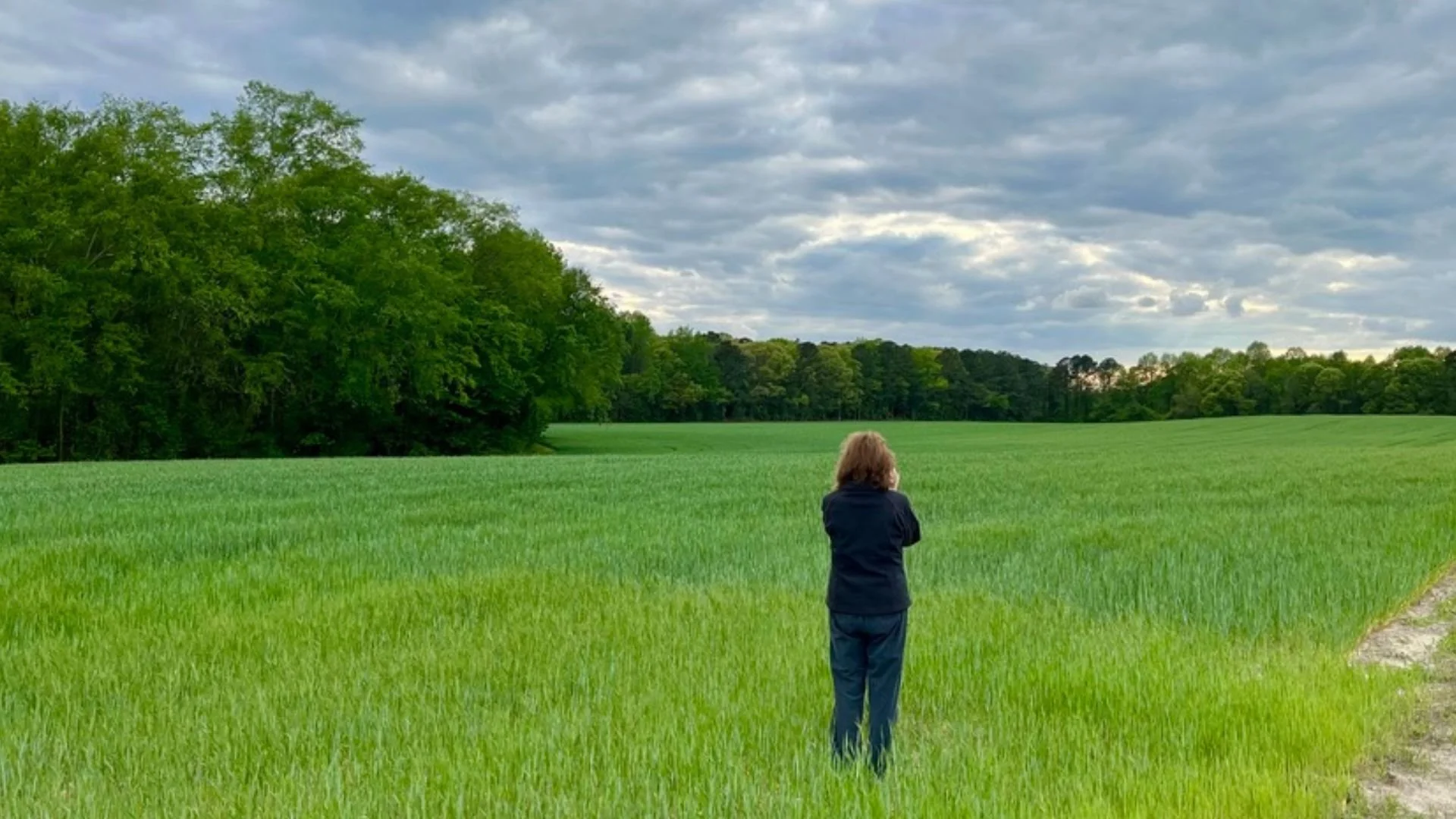
As I ponder these growing problems, I continue to steward my family’s beloved farm, with its woods, fields, and winding paths in a rapidly changing community. I often feel like a lone wolf howling in the wilderness. I see the issues and lament the disappearance of farm after farm, acre upon acre, to be replaced by housing developments, or sometimes rezoned from agricultural residential to industrial.
It’s a vicious circle: when land use changes from agricultural to residential, new residents require more infrastructure, which necessitates additional revenue to pay for needs such as water and sewer lines, roads, and new schools. Although new homeowners are expected to help pay for those additions, the Cost of Community Services study, among others, indicates that residential developments typically incur more costs than income they generate, whereas farmland and open space cost less for services than the revenue they bring in. Why wouldn’t local governments try hard to find ways to save farms and farmland?
Transitioning farmland to housing or industrial use ignores the enormous costs to communities, the environment, agriculture, forest, wetlands, and habitats, including the disappearance of open space and food and crop production. In addition, growing population densities increase traffic and hazards, road noise, pollution, trespassing, and other problems affecting quality of life.
Local governments can and should do more to increase awareness and adopt policies to counter this trend before we have no farmland left.
