
Setting as Character in a Southern Farm Memoir
My memoir setting was a sweltering workplace where my siblings and I bonded in the fields and barns.
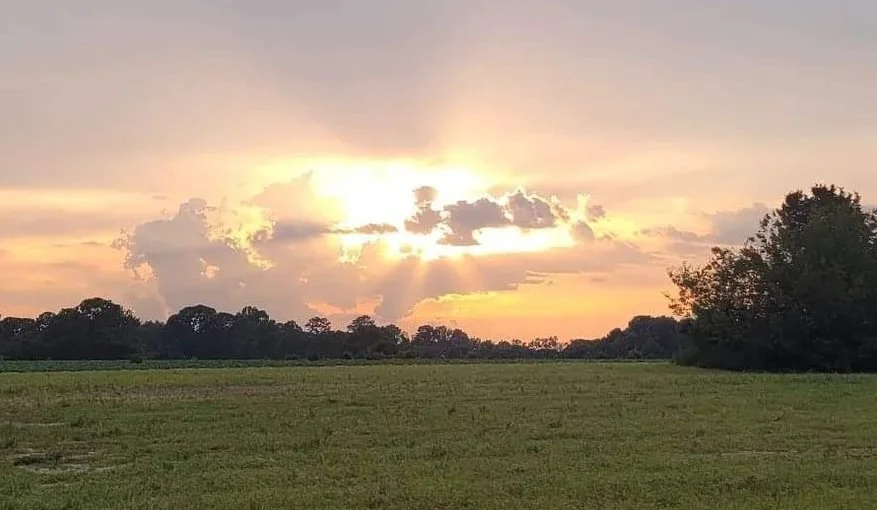
Each day, I realize the depth of my love and appreciation for the North Carolina farm where I grew from an infant to a young woman and forged my identity and future. It has become a rarity—a working farm in a sea of housing developments. Someone described it as a donut hole amongst houses, a disheartening image in the context of a struggling farm and shrinking habitat for wildlife in a rapidly growing area.
Setting as Character in Memoir
The farm is the setting for my coming-of-age memoir, yet it’s much more than a backdrop for the story. I didn’t plan to personify the land, but it inevitably has taken on qualities of a living, breathing character with a unique personality and distinguishing features. Like people in the narrative, It has a history and legacy, varying moods, and a teeming life that changes with the seasons and passing years.
Besides being a place, it has been a home, offering restraint and liberty to people who have known the land and who conveyed a legacy of trust to those following in their footsteps. That trust is stewardship of the land and its natural features for future generations.
Landscapes, Humanity, and Caspar David Friedrich
One of my favorite artists, Caspar David Friedrich, often uses figures in the landscape to suggest the relationship between humanity and nature. The magnitude of his landscapes contrasts with miniscule human figures, as if to show that human perception cannot limit or define nature. The perceptive eye of the artist makes clear that the power of the landscape is independent of a human audience, although a human audience can value, interact with, and hopefully learn from the landscape.
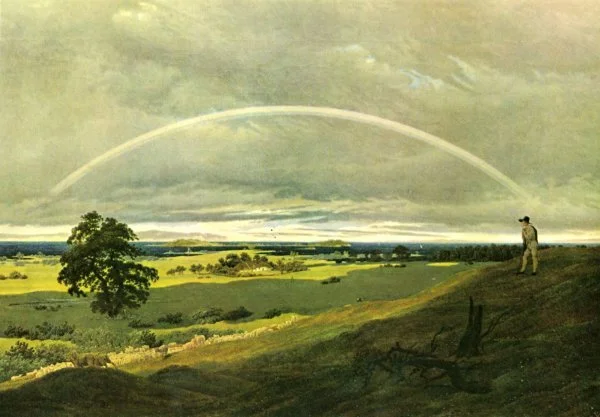
Caspar David Friedrich, Landscape with Rainbow, c. 1810
In our culture today, we see nature—farmland, forests, wetlands, even plants, animals, and minerals—being valued only as exploitable resources. Friedrich reminds us that nature, embodied in landscapes, is a living organism that can teach us if we are open to its lessons.
For me, the family farm with its pond and woods, although not a majestic vista, is a living landscape that thrives independently of human figures who have walked and worked the land. Nature, if loved and cared for, thrives and prevails, while people who lived and toiled there have come and gone like temporary visitors, leaving only traces.
In my youth, the land sheltered, nurtured, encouraged, and carried me as much and sometimes more than others who helped me learn and grow. I sought the paths and woods during times of my greatest despair and greatest perplexity as I worked out who I was and who I was becoming.
Southern Settings
Recently, as I contemplated the farm’s identity, I stumbled across an essay by author Kimberly Brock. She describes the characteristics she believes make a Southern setting unique, including one that rings true for me. Many southerners, she says, “carry a heartache for a homeplace that never stops haunting their dreams.”
I feel the pull of my homeplace, a Southern farm with a grave and an old house that I’ve written about here. Back when I was younger, I experienced the setting as a sweltering workplace and eclectic playground where my siblings and I bonded in the fields and barns. The setting also provided comfort through the healing power of nature, whether in the murmur of pine trees, the cleansing downpours of thunderstorms, or the spicey aroma of sweet Betsy bushes.
The setting of my memoir is mythic and memorable yet real and tangible, with layers of dirt and pine needles covering footprints from long ago. I can only hope to capture the emotional impact embodied in sparkling glints of lightning bugs accompanied by the calls of bob whites at dusk.
